-
Triangle Pose: Everything You Need to Know
When doing the triangle pose, you need to stand on your legs, keep your feet step apart, and extend your arms wide. Engaging thigh muscles, pressing your feet evenly, and relaxing your neck gently are important to ensure proper alignment and correct technique.
Beginners might be vulnerable to making mistakes like rushed entry and locked knees. Collapsing the chest and straining the neck can also result in injury. An experienced yoga teacher can help address these issues. Join a reputable hot yoga center in Dubai to learn the triangle pose for its benefits.

The Triangle Pose has a solid, open shape that keeps you grounded. It helps you stay strong while keeping your focus clear.
What is Triangle Pose?
It’s a foundational pose in many yoga styles. Its name reflects the triangular shape the body forms when you’re practicing.
Step-by-Step Pose Instructions
Here are the step-by-step instructions to execute this pose:
- Stand Straight and Tall
- Step Feet Apart
- Turn Right Foot
- Align Left Heel
- Extend Arms Wide
- Reach Right Hand
- Lower to Shin
- Gaze Upward Gently
- Key Alignment and Technique Tips
The key alignment and techniques tips for the pose are:
- Engage Thigh Muscles
- Press Feet Evenly
- Open Chest Fully
- Lengthen Side Body
- Keep Spine Neutral
- Relax Neck Gently
- Common Mistakes to Avoid
Some common mistakes that you should avoid are:
- Rushed Entry
- Collapsed Chest
- Locked Knees
- Twisted Hips
- Uneven Weight
- Strained Neck
Summary
The triangle pose can be challenging, but the right alignment brings strength and balance. An experienced hot yoga instructor can help you practice the pose accurately.
-
Yoga for Insomnia – Everything You Should Know
Sleep duration and quality impact human beings in more ways than they often realize. Poor sleep can lead to exhaustion, a bad mood, mind fog, and overall tiredness. Dealing with poor sleep for a long time can hinder your work performance and overall health.
Yoga is an effective alternative to sleeping pills and can help you enjoy deep sleep without any side effects. You can make yoga a regular part of your life or practice it before bed to sleep soundly and more quickly. You can also join a hot yoga downtown studio to practice exertion and prepare your body for a restful sleep.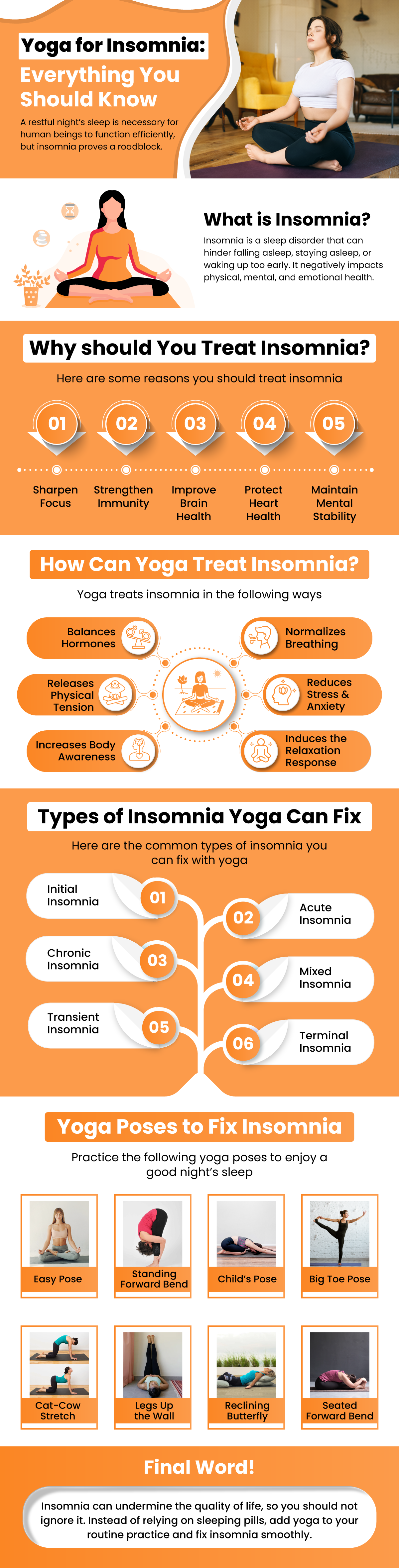
A restful night’s sleep is necessary for human beings to function efficiently, but insomnia proves a roadblock.
What is Insomnia?
Insomnia is a sleep disorder that can hinder falling asleep, staying asleep, or waking up too early. It negatively impacts physical, mental, and emotional health.
Why should You Treat Insomnia?
Here Are Some Reasons You Should Treat Insomnia:
Improve Brain Health
Protect Heart Health
Maintain Mental Stability
Strengthen Immunity
Sharpen Focus
How Can Yoga Practice Treat Insomnia?
Yoga treats insomnia in the following ways:
Reduces Stress and Anxiety
Normalizes Breathing
Induces the Relaxation Response
Increases Body Awareness
Balances Hormones
Releases Physical Tension
Types of Insomnia Yoga Can Fix
Here are the common types of insomnia you can fix with yoga:
Acute Insomnia
Chronic Insomnia
Mixed Insomnia
Transient Insomnia
Terminal Insomnia
Yoga Poses to Fix Insomnia
Practice the following yoga poses to enjoy a good night’s sleep:
Legs Up the Wall
Child’s Pose
Reclining Butterfly
Seated Forward Bend
Supine Twist
Corpse Pose
Cat-Cow Stretch
Big Toe Pose
Final Word!
Insomnia can undermine the quality of life, so you should not ignore it. Instead of relying on sleeping pills, add yoga to your routine practice and fix insomnia smoothly.
-
Hot Yoga In the Morning – What Must You Know?
Hot yoga is not a new practice, yet it has gained significant popularity in recent times. It is practiced in a heated room with controlled temperature settings and high humidity. Practicing hot yoga first thing in the morning can awaken your nerves and boost physical, mental, and emotional well-being. However, you must practice the right poses perfectly. You can join hot yoga downtown studios and practice the poses with certified trainers to secure the desired outcomes.
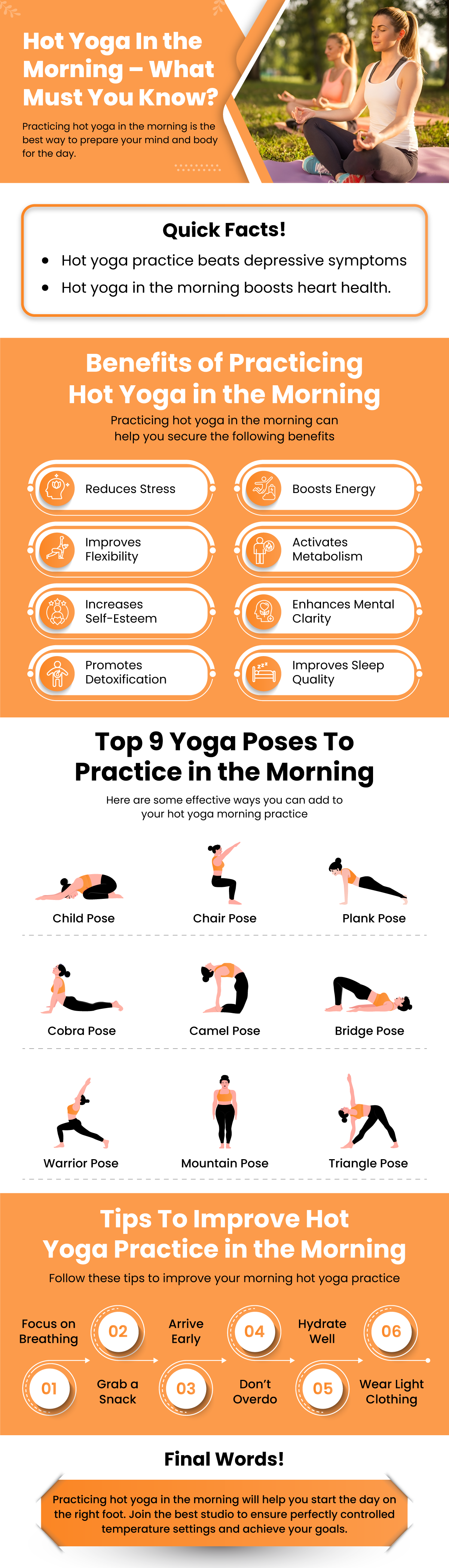
Practicing hot yoga in the morning is the best way to prepare your mind and body for the day.
Do You Know?
According to research:
- Hot yoga practice beats depressive symptoms
- Hot yoga in the morning boosts heart health.
Benefits of Practicing Hot Yoga in the Morning
Practicing hot yoga in the morning can help you secure the following benefits:
- Boosts Energy
- Activates Metabolism
- Improves Flexibility
- Enhances Mental Clarity
- Reduces Stress
- Promotes Detoxification
- Increases Self-Esteem
- Improves Sleep Quality
Top 10 Yoga Poses To Practice in the Morning
Here are some effective ways you can add to your hot yoga morning practice:
- Mountain Pose
- Cat-Cow Pose
- Child Pose
- Chair Pose
- Warrior Pose
- Triangle Pose
- Plank Pose
- Cobra Pose
- Camel Pose
- Bridge Pose
Tips To Improve Hot Yoga Practice in the Morning
Follow these tips to improve your morning hot yoga practice:
- Hydrate Well
- Grab a Snack
- Wear Light Clothing
- Arrive Early
- Focus on Breathing
- Don’t Overdo
Final Words!
Practicing hot yoga in the morning will help you start the day on the right foot. Join the best studio to ensure perfectly controlled temperature settings and achieve your goals.
Read more: Everything You Need to Know About Flying Pigeon Pose
-
Everything You Need to Know About Flying Pigeon Pose
Flying Pigeon Pose challenges your body and mind – you need strength, balance, and flexibility all at the same time. Lots of people rush into it, but then figure out the real secret is prep work and being patient.
Get your alignment right, work that core, and go through different versions slowly – that’s how you get benefits without getting hurt. Practicing on your own isn’t easy and may lead to injuries due to mistakes. That’s why yogis head to hot yoga Downtown studios to practice with expert instructors and prevent risky mistakes.
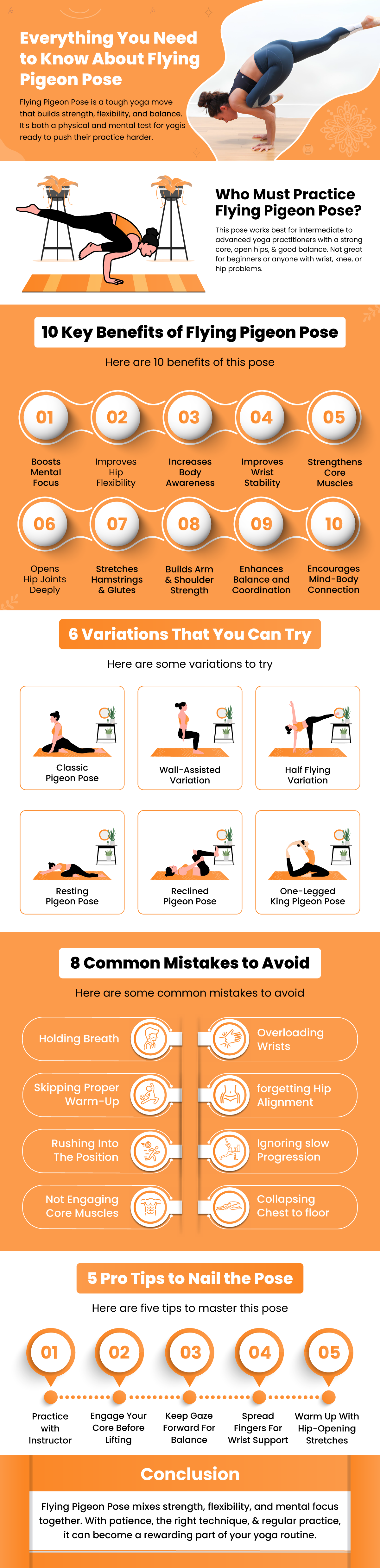
Flying Pigeon Pose is a tough yoga move that builds strength, flexibility, and balance. It’s both a physical and mental test for yogis ready to push their practice harder.
Who Must Practice Flying Pigeon Pose?
This pose works best for intermediate to advanced yoga practitioners with a strong core, open hips, and good balance. Not great for beginners or anyone with wrist, knee, or hip problems.
10 Key Benefits of Flying Pigeon Pose
Here are 10 benefits of this pose:
- Boosts Mental Focus
- Encourages Mind-Body Connection
- Increases Body Awareness
- Improves Wrist Stability
- Builds Arm & Shoulder Strength
- Strengthens Core Muscles
- Enhances Balance & Coordination
- Improves Hip Flexibility
- Opens Hip Joints Deeply
- Stretches Hamstrings & Glutes
6 Variations That You Can Try
Here are some variations to try:
- Supported Flying Pigeon Pose
- Half Flying Pigeon Pose
- Wall-Assisted Flying Pigeon Pose
- Extended Leg Flying Pigeon Pose
- Twisted Flying Pigeon Pose
- Transition To Handstand Flying Pigeon
8 Common Mistakes to Avoid
Here are some common mistakes to avoid:
- Skipping Proper Warm-Up
- Rushing Into The Position
- Neglecting Gradual Progression
- Ignoring Hip Alignment
- Not Engaging Core Muscles
- Collapsing Chest Toward The Floor
- Overloading Wrists
- Holding Breath During The Pose
5 Pro Tips to Nail the Pose
Here are five tips to master this pose:
- Warm Up With Hip-Opening Stretches
- Engage Your Core Before Lifting
- Keep Gaze Forward For Balance
- Spread Fingers For Wrist Support
- Practice with a Qualified Instructor
Conclusion
Flying Pigeon Pose mixes strength, flexibility, and mental focus together. With patience, the right technique, and regular practice, it can become a rewarding part of your yoga routine.
Read more: Top Standing Yoga Poses You Should Practice Daily
-
Top Standing Yoga Poses You Should Practice Daily
Yoga postures like the tree, pyramid, and chair poses are known as standing yoga. These help reduce stress, boost immunity, and enhance coordination. Ensuring proper alignment and engaging the core are essential to executing standing yoga effectively.
There is a risk of injuries if you are a beginner. Therefore, you should seek help from a certified yoga trainer to avoid such consequences. Join a reputable yoga studio in Dubai now to practice standing yoga safely and accurately.

If you want to improve stability, balance, and coordination, standing yoga is the best practice.
What is Standing Yoga?
The type of yoga where you maintain a more or less upright posture with one or both feet on the ground is called standing yoga.
6 Reasons to Practice Standing Yoga Daily
Here are the top reasons to practice standing yoga daily:
- Better Balance
- Improved Stability
- Enhanced Coordination
- Stress Relief
- Mental Clarity
- Boosted Immunity
Top Standing Yoga Poses You Should Try
Try the following standing yoga poses for the desired outcomes:
- Mountain Pose
- Triangle Pose
- Pyramid Pose
- Dancer Pose
- Tree Pose
- Chair Pose
- Warrior I
- Warrior II
6 Tips to Do Standing Yoga Poses Correctly
These tips will help you do standing yoga poses correctly:
- Ensure Proper Alignment
- Engage the Core
- Focus on one Point
- Use Your Muscles
- Practice Regularly
- Join a Yoga Studio
Summary
In standing yoga, you keep one or both feet on the ground. It includes styles like the mountain or triangle poses. These postures enhance balance and improve stability. Seek help from a yoga expert to practice these poses accurately.
-
Wheel Pose – Everything You Need to Know
It’s quite common to get caught up in the way a pose looks, but it can feel all different when you practice it. The good thing about wheel pose is that it falls in the backbend category of the yoga world. If you’re a new yogi, practicing backbends is very important because such poses open up the chest and heart region.
Consistency with backbend poses like wheel can reduce fear, stress, and anxiety. It also unlocks your true potential in the yoga practice to enable you to perform complex poses. However, to reduce the risk of injuries while practicing, you can leverage the experience of trainers. For this, head to a yoga studio in Dubai to practice under observation and minimize the risk of injuries.

Wheel pose, also known as Urdhva Dhanurasana, is a backbend pose that energizes your whole body. It’s a powerful pose that can help you unlock your maximum flexibility.
How to Practice Wheel Pose?
Here is how to practice wheel pose:
- Start by lying on your back.
- Keep your knees bent and feet hip-width apart, and close your glutes.
- Place your palms beside your ears.
- Press into your hands and feet to lift into the pose.
10 Benefits of Wheel Pose
Wheel pose provides many benefits, including:
- Boosts Energy
- Opens Chest
- Enhances Flexibility
- Stimulates Thyroid
- Improves Posture
- Tones Abdomen
- Relieves Stress
- Strengthens Arms
- Increases Stamina
- Expands Lungs
6 Wheel Pose Variations to Try
Here are six wheel pose variations to try:
- Forearm Wheel
- One-legged Wheel
- Block-Support Wheel
- Wall-Assisted Wheel
- Strap-Supported Wheel
- Straight-Legged Wheel
8 Common Wheel Pose Mistakes to Avoid
Avoid these mistakes to minimize injury risk:
- Skipping Warm-Up
- Rushing Into Pose
- Holding Breath
- Overarching Spine
- Ignoring Wrist Pain
- Misaligned Knees and Feet
- Collapsing Lower Back
- Poor Shoulder Engagement
Conclusion
While the pose may be hard to learn, its physical and emotional benefits make it worth practicing. With consistency, you can nail the pose, and it can elevate your yoga journey.
-
How Does Yoga Contribute to Holistic Health?
Yoga promotes physical, mental, and emotional health which is integral to holistic well-being. Practicing yoga with mindfulness helps relieve stress while enhancing flexibility and strength and clarity of the mind. It also helps achieve the emotional balance needed for good posture, along with pain alleviation. These yoga techniques of breathing with postures assist in building immunity, detoxifying the body, and enhancing circulation.
Furthermore, this relaxation process calms and increases self-awareness, which can be a good facilitator for overall well-being. Practicing this continuously can transform your lifestyle for good health and greater emotional resilience. The beauty of yoga is that it is truly a healing path to physical and emotional balance for everyone, from beginner to advanced yoga practitioners. So, you can choose Yoga Studio Dubai and practice the effective asanas to lead a healthy, and balanced life.
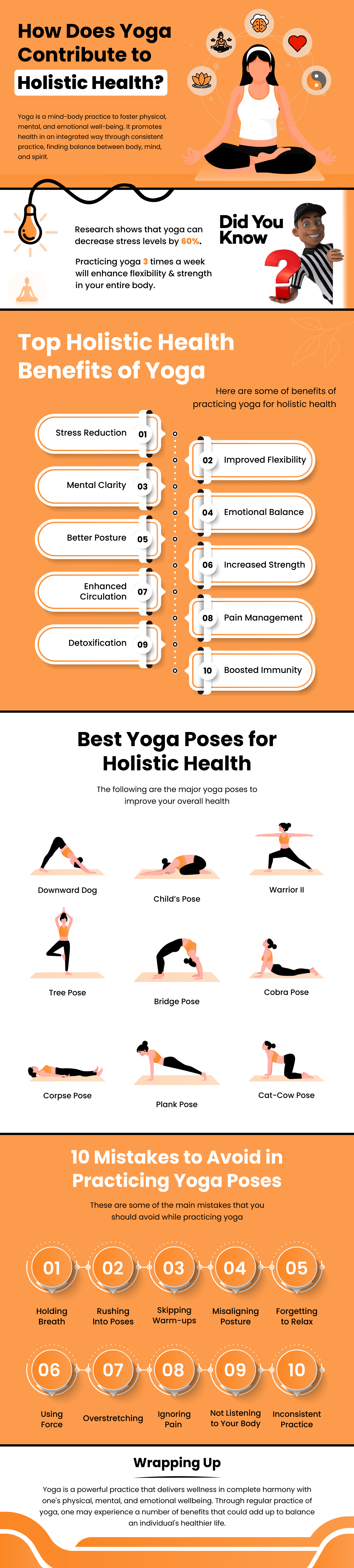
Yoga is a mind-body practice to foster physical, mental, and emotional well-being. It promotes health in an integrated way through consistent practice, finding balance between body, mind, and spirit.
Did You Know?
- Research shows that yoga can decrease stress levels by 60%.
- Practicing yoga 3 times a week will enhance flexibility and strength in your entire body.
Top Holistic Health Benefits of Yoga
Here are some of benefits of practicing yoga for holistic health:
- Stress Reduction
- Improved Flexibility
- Mental Clarity
- Emotional Balance
- Better Posture
- Increased Strength
- Enhanced Circulation
- Pain Management
- Detoxification
- Boosted Immunity
Best Yoga Poses for Holistic Health
The following are the major yoga poses to improve your overall health:
- Downward Dog
- Child’s Pose
- Warrior II
- Tree Pose
- Bridge Pose
- Cobra Pose
- Seated Forward Bend
- Plank Pose
- Cat-Cow Pose
- Corpse Pose
10 Mistakes to Avoid in Practicing Yoga Poses
These are some of the main mistakes that you should avoid while practicing yoga:
- Holding Breath
- Rushing Into Poses
- Overstretching
- Misaligning Posture
- Forgetting to Relax
- Using Force
- Skipping Warm-ups
- Ignoring Pain
- Not Listening to Your Body
- Inconsistent Practice
Wrapping Up
Yoga is a powerful practice that delivers wellness in complete harmony with one’s physical, mental, and emotional wellbeing. Through regular practice of yoga, one may experience a number of benefits that could add up to balance an individual’s healthier life.
-
Yoga for Migraine: Top 8 Poses to Try
Migraine is a neurological disease that often runs in families. Yoga postures like ragdoll, corpse, downward dog, and forward fold poses can help manage its intensity and frequency. Starting slowly, staying hydrated, and using props are essential to enhance the results. It is also critical to practice these poses under the supervision of an expert. They will help perform these styles precisely, reducing the risk of potential mistakes and injuries. Join a reputable yoga studio in Dubai now to leverage the potential of yoga for migraine management.
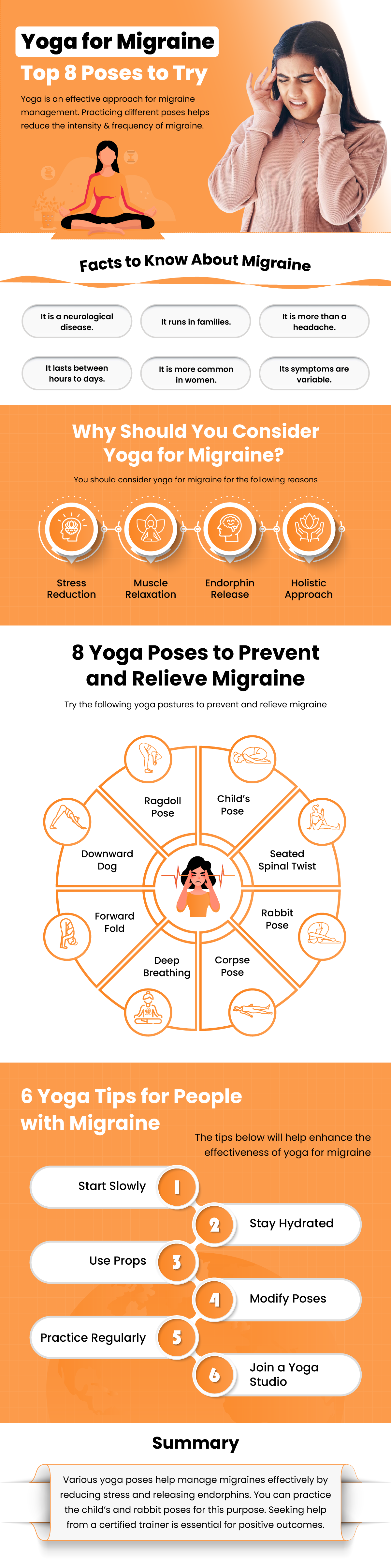
Yoga is an effective approach for migraine management. Practicing different poses helps reduce the intensity and frequency of migraine.
Facts to Know About Migraine
Here are some of the most important facts you should know about migraine:
- It is a neurological disease.
- It runs in families.
- It is more than a headache.
- It lasts between hours to days.
- It is more common in women.
- Its symptoms are variable.
Why Should You Consider Yoga for Migraine?
You should consider yoga for migraine for the following reasons:
- Stress Reduction
- Muscle Relaxation
- Endorphin Release
- Holistic Approach
8 Yoga Poses to Prevent and Relieve Migraine
Try the following yoga postures to prevent and relieve migraine:
- Ragdoll Pose
- Child’s Pose
- Seated Spinal Twist
- Rabbit Pose
- Corpse Pose
- Forward Fold
- Deep Breathing
- Downward Dog
6 Yoga Tips for People with Migraine
The tips below will help enhance the effectiveness of yoga for migraine:
- Start Slowly
- Stay Hydrated
- Use Props
- Modify Poses
- Practice Regularly
- Join a Yoga Studio
Summary
Various yoga poses help manage migraines effectively by reducing stress and releasing endorphins. You can practice the child’s and rabbit poses for this purpose. Seeking help from a certified trainer is essential for positive outcomes.
-
Yoga Moon Salutation Sequence – What Must You Know?
The yoga moon salutation sequence consists of specific poses that are performed in an order. The moon sequences specifically enhance the cooling effect and create flowing movements. These poses reduce anxiety and calm the mind and body. Due to this practicing the moon sequence is the perfect option to include in your night routine to enjoy better quality sleep.
However, all of this is only possible when you practice the poses perfectly. You can join a yoga studio in Dubai and learn the poses from certified trainers and perform them efficiently to achieve the intended outcomes.
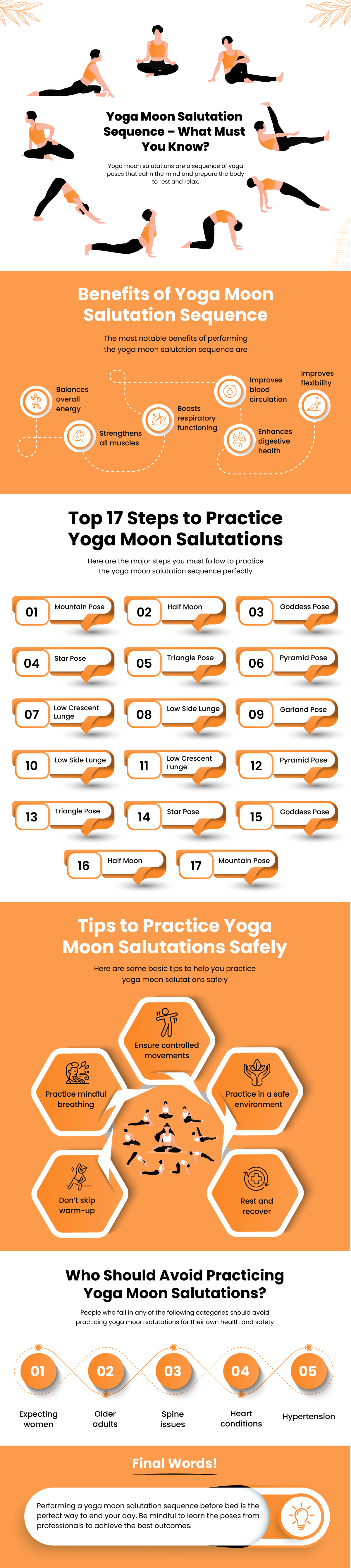
What is the Yoga Moon Salutation Sequence?
Yoga moon salutations are a sequence of yoga poses that calm the mind and prepare the body to rest and relax.
Benefits of Yoga Moon Salutation Sequence
The most notable benefits of performing the yoga moon salutation sequence are:
- Balances overall energy
- Improves flexibility
- Boosts respiratory functioning
- Improves blood circulation
- Enhances digestive health
- Strengthens all muscles
Top 17 Steps to Practice Yoga Moon Salutations
Here are the major steps you must follow to practice the yoga moon salutation sequence perfectly:
- Mountain Pose
- Half Moon
- Goddess Pose
- Star Pose
- Triangle Pose
- Pyramid Pose
- Low Crescent Lunge
- Low Side Lunge
- Garland Pose
- Low Side Lunge
- Low Crescent Lunge
- Pyramid Pose
- Triangle Pose
- Star Pose
- Goddess Pose
- Half Moon
- Mountain Pose
Tips to Practice Yoga Moon Salutations Safely
Here are some basic tips to help you practice yoga moon salutations safely:
- Don’t skip warm-up
- Practice mindful breathing
- Ensure controlled movements
- Practice in a safe environment
- Rest and recover
Who Should Avoid Practicing Yoga Moon Salutations?
People who fall in any of the following categories should avoid practicing yoga moon salutations for their own health and safety:
- Expecting women
- Older adults
- Spine issues
- Heart conditions
- Hypertension
Final Words!
Performing a yoga moon salutation sequence before bed is the perfect way to end your day. Be mindful to learn the poses from professionals to achieve the best outcomes.
-
Fusion Yoga Classes: All You Need to Know
Yoga is the ultimate fitness practice to keep your mind and body in good shape. When you combine yoga with other training disciplines like Pilates and martial arts, it turns into fusion yoga. Fusion yoga is a widely practiced yoga session with multiple poses to enhance your body’s flexibility and posture. It allows you to manage your stress and improve your cardiovascular health.
Fusion yoga requires you to pay attention to the way you perform poses. You can learn and practice this yoga at academies like Hot Yoga DIFC; join it today to master fusion yoga.
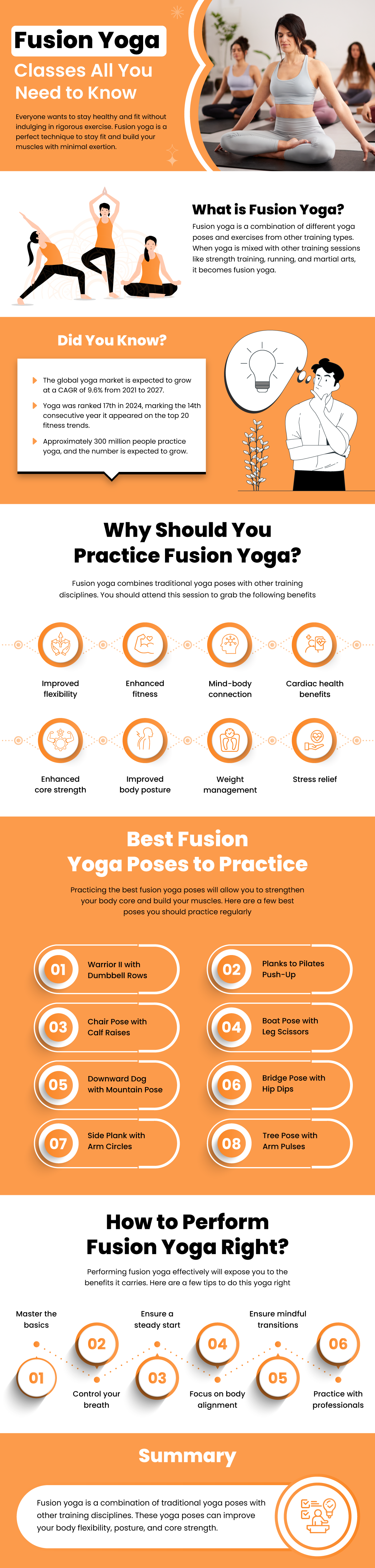
Everyone wants to stay healthy and fit without indulging in rigorous exercise. Fusion yoga is a perfect technique to stay fit and build your muscles with minimal exertion.
Did You Know?
- The global yoga market is expected to grow at a CAGR of 9.6% from 2021 to 2027.
- Yoga was ranked 17th in 2024, marking the 14th consecutive year it appeared on the top 20 fitness trends.
- Approximately 300 million people practice yoga, and the number is expected to grow.
What is Fusion Yoga?
Fusion yoga is a combination of different yoga poses and exercises from other training types. When yoga is mixed with other training sessions like strength training, running, and martial arts, it becomes fusion yoga.
Why Should You Practice Fusion Yoga?
Fusion yoga combines traditional yoga poses with other training disciplines. You should attend this session to grab the following benefits:
- Improved flexibility
- Enhanced fitness
- Mind-body connection
- Cardiac health benefits
- Enhanced core strength
- Improved body posture
- Weight management
- Stress relief
Best Fusion Yoga Poses to Practice:
Practicing the best fusion yoga poses will allow you to strengthen your body core and build your muscles. Here are a few best poses you should practice regularly:
- Warrior II with Dumbbell Rows
- Planks to Pilates Push-Up
- Chair Pose with Calf Raises
- Boat Pose with Leg Scissors
- Downward Dog with Mountain Pose
- Bridge Pose with Hip Dips
- Side Plank with Arm Circles
- Tree Pose with Arm Pulses
How to Perform Fusion Yoga Right?
Performing fusion yoga effectively will expose you to the benefits it carries. Here are a few tips to do this yoga right:
- Master the basics
- Control your breath
- Ensure a steady start
- Focus on body alignment
- Ensure mindful transitions
- Practice with professionals
Summary:
Fusion yoga is a combination of traditional yoga poses with other training disciplines. These yoga poses can improve your body flexibility, posture, and core strength.
Read more: https://yogahotstudiofitness.wordpress.com/
-
Subscribe
Subscribed
Already have a WordPress.com account? Log in now.
 Yoga Hot Studio