Beginners often struggle with a lack of core strength, flexibility, and poor balance. By practicing half-moon pose in your daily routine you can address all this and improve your ability to deepen your yoga practice. Also, with different variations, practitioners can challenge themselves and target different muscle groups.
While the pose can definitely be a game-changer in your yoga practice it’s also important to ensure you are practicing it correctly. Doing it incorrectly and lead to injuries which may affect your practice negatively. Considering this, you head to a hot yoga center in downtown to practice with expert instructors and avoid misalignments.
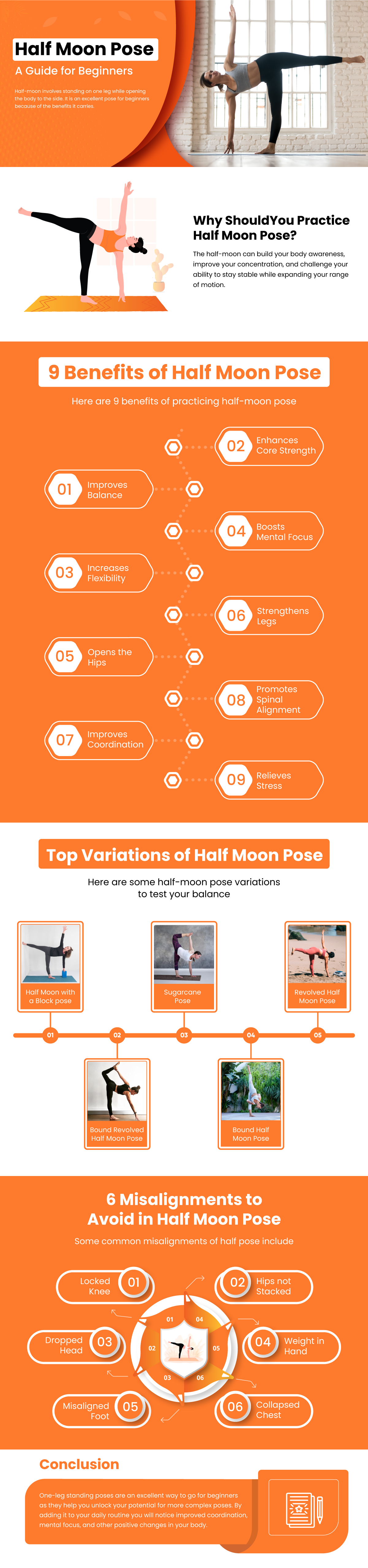
Half-moon involves standing on one leg while opening the body to the side. It is an excellent pose for beginners because of the benefits it carries.
Why Should You Practice Half Moon Pose?
The half-moon can build your body awareness, improve your concentration, and challenge your ability to stay stable while expanding your range of motion.
9 Benefits of Half Moon Pose
Here are 9 benefits of practicing half-moon pose:
- Improves Balance
- Enhances Core Strength
- Increases Flexibility
- Boosts Mental Focus
- Opens the Hips
- Strengthens Legs
- Promotes Spinal Alignment
- Improves Coordination
- Relieves Stress
See also: How Does Yoga Enhance Mindfulness and Self-Awareness?
Top Variations of Half Moon Pose
Here are some half-moon pose variations to test your balance:
- Bound Half Moon Pose
- Extended Half Moon Pose
- Revolved Half Moon Pose
- Reverse Half Moon Pose
- Flying Half Moon Pose
6 Misalignments to Avoid in Half Moon Pose
Some common misalignments of half pose include:
- Locked Knee
- Hips not Stacked
- Dropped Head
- Weight in Hand
- Misaligned Foot
- Collapsed Chest
Conclusion
One-leg standing poses are an excellent way to go for beginners as they help you unlock your potential for more complex poses. By adding it to your daily routine you will notice improved coordination, mental focus, and other positive changes in your body.


 Yoga Hot Studio